

From real-time monitoring and fleetwide communication to fishing gear innovation, Alaska pollock captains are continually working to avoid salmon and other unintended catch.
Alaska Pollock Fishery Alliance
November 2, 2026
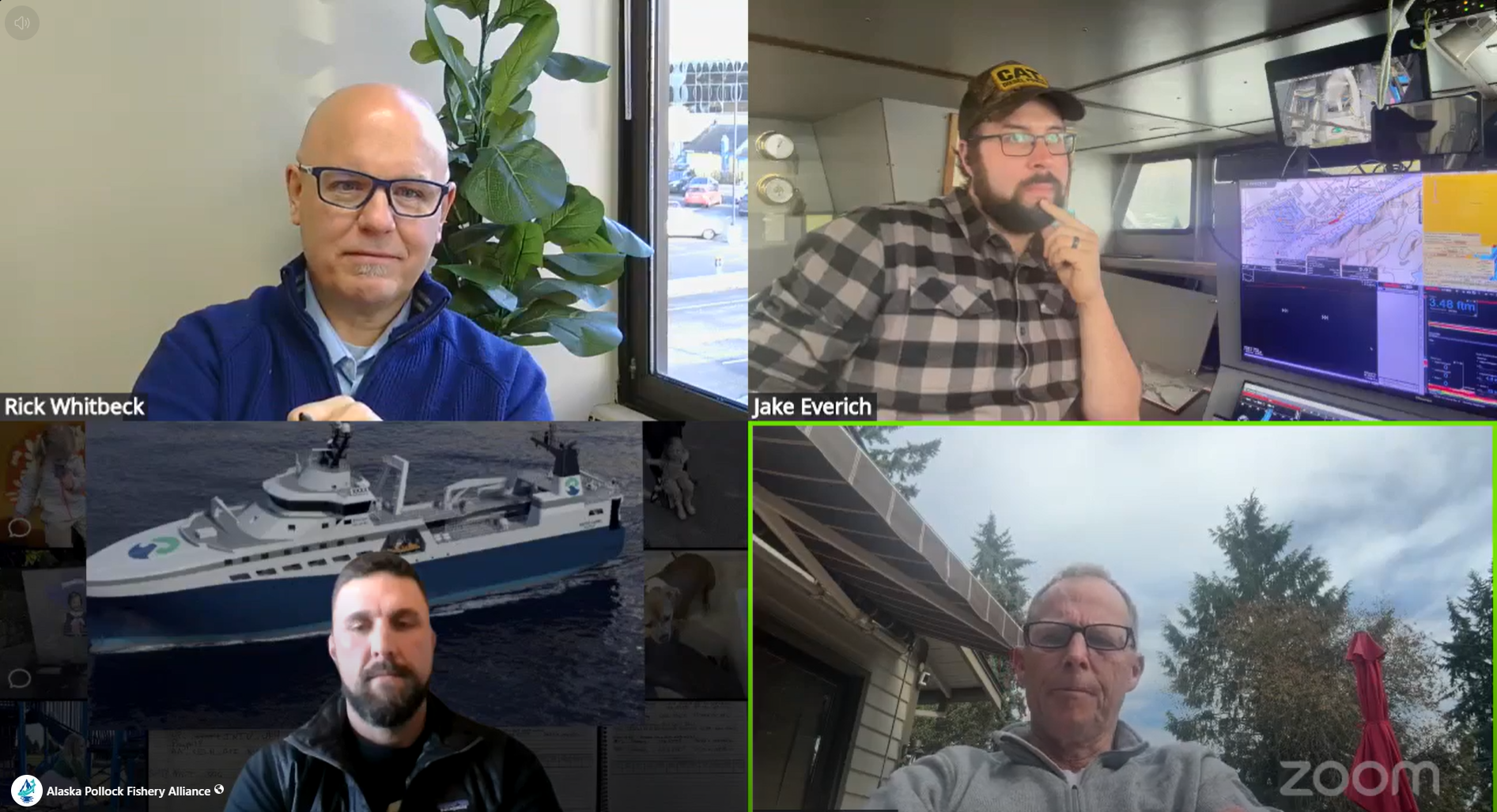
Pictured clockwise from top left:
Rick Whitbeck, Moderator
Jake Everich, Captain, F/V Alaskan
Gary Longaker, Captain, F/V Defender
Shawn Kenny, Captain, C/P Arctic Fjord
When Captain Gary Longaker learned a school of herring had been spotted in nearby fishing grounds, he made a decision: move the F/V Defender 80 miles to find somewhere else to fish.
Captain Jake Everich described making a similar call near Kodiak, traveling 100 miles after reviewing salmon bycatch reports.
For Alaska pollock captains, decisions like these are part of the responsibility that comes with fishing. Knowing what's happening in the water, sharing information with other vessels and adjusting fishing operations to avoid catching species other than pollock are all part of the job.
"We're always striving for better," Longaker said.
That commitment was a common theme during a recent Alaska Pollock Fishery Alliance (APFA) Captains Conversation, where Longaker, Everich and Captain Shawn Kenny shared firsthand perspectives on how they monitor their catch, avoid salmon and other bycatch, and work to improve fishing practices.
The three captains represent different parts of the Alaska pollock fleet. Everich's F/V Alaskan delivers its catch to processors in Kodiak, while Longaker's F/V Defender brings fish into Dutch Harbor. Kenny's Arctic Fjord catches, processes and freezes Alaska pollock at sea.
Although their operations differ, the captains described a shared approach: accountability starts before fishing begins, continues with monitoring every catch, and extends to the decisions crews make on the water.
Monitoring and accountability from vessel to shore
Monitoring is a fundamental part of the Alaska pollock fishery. Independent observers, electronic monitoring systems and detailed catch records provide multiple layers of oversight and help ensure fishing activity is documented.
Before the Arctic Fjord leaves port, Kenny makes sure its monitoring systems are ready. Two observers from NOAA's North Pacific Observer Program work aboard the vessel, documenting fishing activity, while cameras monitor the factory, fish bins and scales used to weigh the catch.
"We don't leave the dock unless we know that we're 100% covered on both," Kenny said.
For Everich, accountability also comes down to the details. During the conversation, he opened his vessel's fishing logbook to show the routine maintenance and monitoring records kept aboard the Alaskan — everything from replacing a monitoring system's hard drive to cleaning a camera lens. Four cameras monitor fishing activity aboard the vessel, helping create a documented record of each trip.
Everich also explained how salmon caught aboard his vessel are delivered to shore-based processors, where independent fisheries observers count them and collect biological data.
Together, these monitoring practices help document what is caught, provide information to fishery managers and support accountability against established catch limits.
That accountability becomes especially important as fishing seasons progress and remaining allocations decrease.
"That's just not acceptable to go over your quota," Kenny said.
Avoiding bycatch starts before the catch
While monitoring and documentation are essential, the captains emphasized that the priority is avoiding unwanted catch in the first place.
Aboard the Arctic Fjord, Kenny can watch live camera footage of fish entering the net. If salmon appear, the crew can adjust fishing depth or slow the vessel, giving salmon an opportunity to escape through a specially designed opening in the net known as a salmon excluder.
Crews also inspect fishing gear between tows to make sure equipment is properly positioned and functioning as intended.
Those efforts extend beyond individual vessels. Captains communicate about fishing conditions and areas where salmon, herring or other species have been encountered. Phone calls, messages and catch reports help neighboring vessels make informed decisions about where and how to fish.
Sometimes that means changing fishing locations altogether. As Longaker and Everich described, avoiding an area can require traveling significant distances and spending additional time and fuel to find better fishing conditions.
These decisions illustrate an important part of bycatch avoidance: responsible fishing isn't just about what happens after fish enter a net. It's also about the information captains use and the choices they make before setting their gear.
Collaboration drives fishing gear innovation
The captains also discussed the ongoing effort to develop and improve fishing gear designed to reduce salmon bycatch.
Longaker spoke about new salmon excluder concepts, including one being developed by another fisherman that would use camera technology to trigger an escape flap when salmon are detected in the net. Kenny described how fishermen and crews contribute to these improvements by testing equipment, sharing observations and bringing firsthand experience back to the development process.
This kind of collaboration is important in an industry where conditions are constantly changing and there is always room to improve.
For Longaker, who has spent roughly four decades in the Alaska pollock fishery, the willingness of vessels and crews to share information and work toward common goals is one of the things he takes particular pride in.
Even when operating independently, captains recognize that reducing bycatch and improving fishing practices are shared responsibilities.
A continued commitment to responsible fishing
The conversation offered a firsthand look at the work and decisions behind the Alaska pollock fishery — much of which happens out of sight of consumers and the broader public.
From independent observers and electronic monitoring to real-time communication between vessels and continued investment in fishing gear innovation, responsible fishing requires constant attention, coordination and a willingness to adapt.
The examples shared by Longaker, Everich and Kenny reflect a common goal across the fleet: target Alaska pollock, avoid salmon and other unintended catch, remain accountable for every catch, and keep finding better ways to fish.
As Longaker put it, "We're always striving for better."
That's an ongoing commitment shared by the fishermen and crews who work on the water every day.