

The Toughest Fishing Trip Told the Best Story
Sam Murphy, APFA Vice President of Communications
October 9, 2026
Salmon are returning to some of Western Alaska’s most important river systems in numbers far below what communities have relied on for generations. For families who depend on those fish for food, culture and tradition, the consequences are personal. The questions about why salmon are declining, what’s driving it and what role different fisheries may play deserve serious answers.
In July, I joined a national reporter aboard the F/V Progress in the Bering Sea to see Alaska’s pollock fishery firsthand. I hoped we’d have one of those textbook fishing trips: steady fishing, clean catches and the kind of experience that makes explaining this fishery easy. Instead, we experienced one of the toughest trips of Capt. Maverick Blake’s nearly 15-year career. Looking back, I’m glad we did.
For nearly 24 hours, we searched for pollock. Reports crackled across the radio as captains shared fishing conditions and salmon encounters. Pollock had been difficult to find, and nobody was reporting banner fishing. What struck me wasn’t simply what the captains were sharing, but why. These were independent operators communicating about conditions, trying to understand what the ocean was giving them and helping one another find areas where cleaner fishing might be possible. Long before our net ever entered the water, salmon avoidance was already shaping decisions.
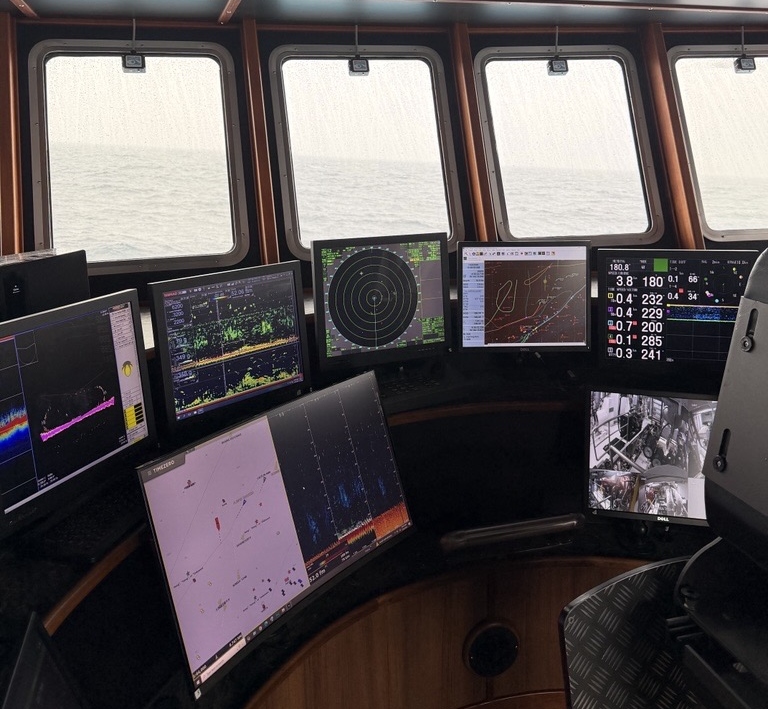
Wheelhouse of the F/V Progress
Eventually, Capt. Maverick found what he believed was our best opportunity. After nearly a full day of searching, the mood onboard changed. Crew members moved with renewed energy. It finally felt like we’d found the pollock everyone had been looking for. After roughly eight hours, the net came aboard with nearly 180,000 pounds of pollock. It also held roughly 200 chum salmon.
The excitement disappeared almost instantly. Nobody celebrated. Nobody shrugged. Nobody pretended the encounter didn’t matter. The question became: where do we go next?
The easiest decision would have been to stay. We’d finally found pollock after nearly a day of searching, and the vessel had harvested only a fraction of what it could carry. Every additional tow represented more fish, more progress toward filling the hold and income for the crew. Instead, we left.
We spent the next 16 hours searching, covering roughly 160 nautical miles before reaching grounds that looked promising. But promising wasn’t enough. Capt. Maverick ordered a short test tow to see whether salmon were present before committing to the area. The catch included about 10 metric tons of pollock and roughly 10 chum salmon. He had the catch brought aboard slowly so the crew could inspect what was coming over the rail. Still, he wasn’t convinced. Again, we left.
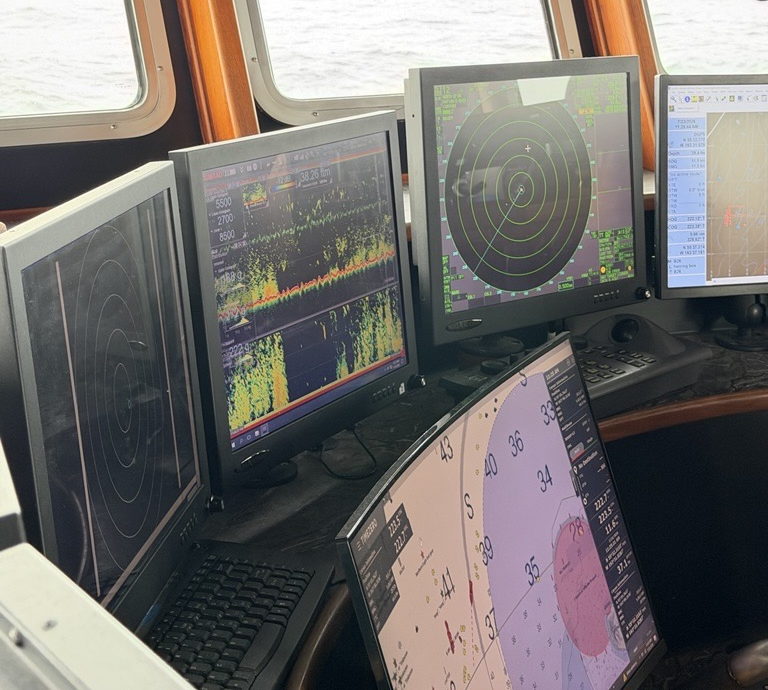
Sonar and Navigation Displays Aboard the F/V Progress
Before this trip, if someone had asked me what salmon avoidance looked like, I probably would have talked about regulations, genetics, excluder devices and management measures. Now I’d answer differently. It looks like a captain staring at 180,000 pounds of pollock and deciding to leave anyway. It looks like spending another 16 hours searching, then testing an area before committing to it. And it looks like making consequential decisions without having all the answers.
From shore, it’s easy to picture a commercial fishery as a giant industrial machine. Out there, it felt remarkably human. The ocean doesn’t offer perfect choices. Weather changes. Currents shift. Pollock and salmon don’t always separate themselves neatly. Captains make decisions with incomplete information, hoping the next tow will be cleaner than the last.
That uncertainty matters when discussing Western Alaska’s declining salmon runs. A salmon caught in the Bering Sea doesn’t tell us where it originated simply by looking at it. Establishing its origin requires science. And identifying where a salmon originated is different from determining why its population has declined. Those questions are connected, but they aren’t interchangeable. None of that makes a salmon encounter inconsequential. It makes understanding each encounter more important.
The day after returning to Unalaska, we visited an independent science lab where salmon from our trip had entered the genetics process. Standing there connected the pieces for me: the conversations between captains, the decisions on the bridge, the sampling and the science that follows.
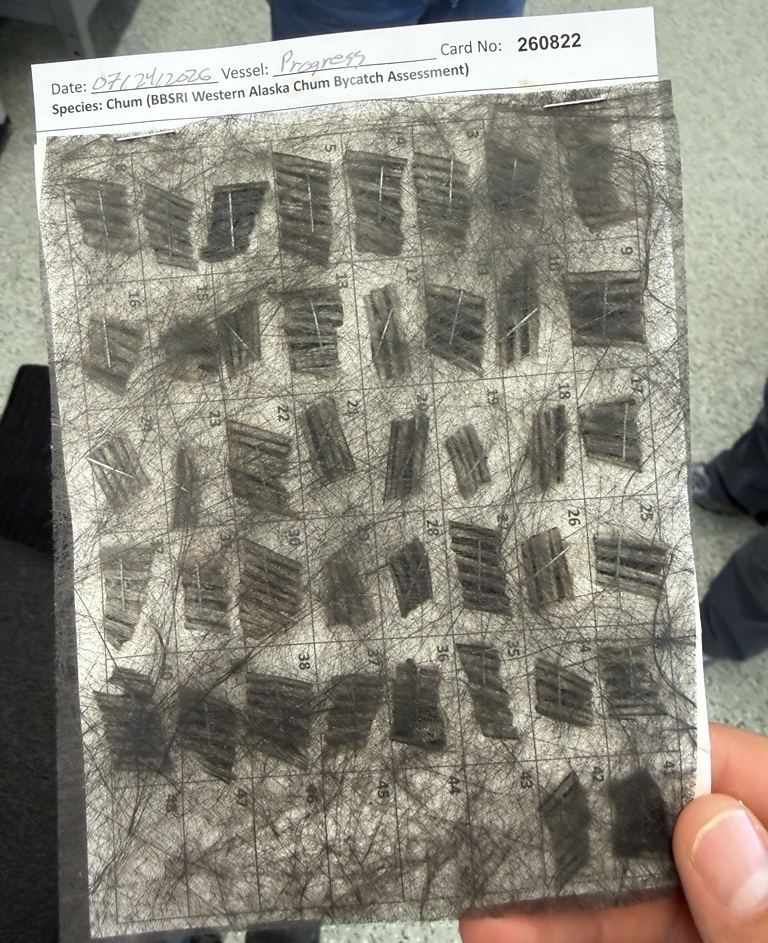
Chum Salmon Fin Clip Samples for Genetic Analysis
The fishery isn’t perfect, and no commercial fishery is without impacts. Every salmon encounter matters, particularly when communities are already facing profound challenges. That first tow mattered. The crew knew it. The captain knew it. But so did everything that happened afterward.
The captain couldn’t wait for genetic results to decide what to do next. He had to make a call in real time: leave the fish, keep searching and try another area. We finally found the pollock we’d spent nearly a day searching for, and then we left. Not because there wasn’t enough pollock, but because the salmon encounter gave the captain reason to look elsewhere.
The AP story published today brings renewed attention to the difficult questions surrounding salmon, bycatch and the future of Western Alaska’s fisheries. Those questions deserve attention. So do the people and decisions behind the numbers. I was on that same trip. I saw the salmon come aboard, watched the captain decide we wouldn’t stay, and spent the next hours searching alongside a crew whose livelihoods depended on finding pollock. I also saw those salmon enter a scientific process designed to help establish where they came from.
That experience didn’t give me every answer. It gave me a better understanding of how complicated the questions really are. No single trip can explain what is happening to Western Alaska’s salmon. No single catch can tell the whole story of a fishery. And no serious effort to understand either should stop at what comes over the rail.
The communities that depend on salmon deserve the full picture, honest questions and answers grounded in evidence. After spending several days in the Bering Sea, I believe that starts with being willing to look beyond the catch—and at what happens next.